✵TCM herbalism is also known as the pharmaceutics of Traditional Chinese Medicine or Chinese pharmaceutics. It is the branch of health science dealing with the preparation, dispensing, and proper utilization of Chinese herbs. It is primarily composed of Introduction to Chinese Medicinals, Classification of Chinese Herbs, Formulas, and Patent Medicines.
Herbs Clearing Heat and Drying Dampness.
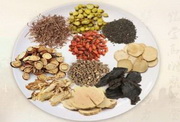
Introduction: Herbs Clearing Heat and Drying Dampness are agents or substances bitter in taste and cold in property, effective for eliminating heat and dampness. They are commonly used to treat diseases caused by damp-heat, such as acute jaundice, acute dysentery, urinary tract infections, eczema, boils, and abscesses.
Heat-clearing herbs are mostly cold or cool in nature; a few are neutral and cool. Most are bitter in flavor, while some are sweet, pungent, or salty. Their functions include clearing heat, purging fire, cooling the blood, detoxifying heat pathogens, relieving deficient heat, drying dampness, dispelling dampness, nourishing Yin, and relieving exterior syndromes. These herbs are primarily indicated for various interior-heat syndromes. Heat-clearing herbs are classified into five main categories: (1) heat-clearing and fire-purging herbs; (2) heat-clearing and dampness-drying herbs; (3) heat-clearing and counteracting-toxins herbs; (4) heat-clearing and blood-cooling herbs; and (5) asthenic heat-clearing herbs.
Heat-clearing and dampness-drying herbs are predominantly cold in nature and bitter in flavor. Their actions include dispelling pathogenic heat and drying dampness, as well as purging fire and detoxifying. They are mainly used for damp-heat syndromes, characterized by symptoms such as fever, chest oppression, scanty dark urine, yellow greasy tongue coating, and a yellow tongue body. Representative herbs in this category include Radix Scutellariae (Huánɡ Qín); other examples are Cortex Phellodendri (Huánɡ Bò), Radix Gentianae (Lónɡ Dǎn), Radix Sophorae Flavescentis (Kǔ Shēn), Cortex Fraxini (Qín Pí), Cortex Dictamni (Bái Xiān Pí), Cortex Ailanthi (Chūn Pí), Radix Berberidis (Sān Kē Zhēn), Fructus Gardeniae (Zhī Zi), Radix Berberidis (Sān Kē Zhēn), etc.
✵As of January 1, 2024, this category includes [11] commonly used TCM herbs derived from [29] plant species. Each herb is briefly introduced separately below.
Radix Scutellariae (Baical Skullcap Root)
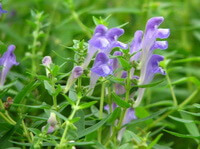
Brief Introduction:Radix Scutellariae is the dried root of Scutellaria baicalensis Georgi. It is used: (1) to clear heat and dry dampness—treating damp-warm and damp-heat syndromes; (2) to clear lung heat—relieving cough due to lung heat; (3) to purge fire and resolve toxins—treating boils, sores, and painful throat swelling; (4) to cool the blood—stanching hematemesis, epistaxis, and abnormal uterine bleeding; and (5) to stabilize the fetus—preventing miscarriage in cases of threatened abortion. The herb is commonly known as Radix Scutellariae, Baical Skullcap Root, or Huáng Qín.
Cortex Phellodendri (Amur Cork-tree)
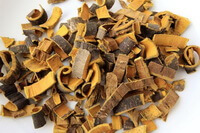
Brief Introduction:Cortex Phellodendri is the dried bark of the Chinese corktree, Phellodendron chinense Schneid., or the Amur corktree, Phellodendron amurense Rupr. It is used (1) to clear heat and dry dampness in cases of acute dysentery, jaundice, morbid leukorrhea, and heat stranguria; (2) to purge fire and counteract toxins for treating boils, sores, and ulcers; and (3) to relieve fever in cases of Yin deficiency with night sweats. The herb is commonly known as Cortex Phellodendri, Amur Cork-tree, or Huánɡ Bò.
Radix Berberidis (Barberry Root)
Brief Introduction: The herb Radix Berberidis is the dried root of Berberis soulieana Schneid., Berberis wilsonae Hemsl., Berberis poiretii Schneid., or Berberis vernae Schneid., used similarly to Coptis chinensis (Huang Lian, "Golden Thread"). It is commonly known as Barberry Root, Root of Chinese Barberry, or Sān Kē Zhēn.
Radix Gentianae (Chinese Gentian)
Brief Introduction:Radix Gentianae is the dried root and rhizome of Gentiana manshurica Kitag., Gentiana scabra Bunge., Gentiana triflora Pall., or Gentiana rigescens Franch. It is used to clear heat, dry dampness, and purge liver and gallbladder fire for treating: (1) damp-heat in the liver and gallbladder—manifesting as morbid leukorrhea, jaundice, or eczema; and (2) liver fire—manifesting as headache, hypochondriac pain, deafness, or convulsions. The herb is commonly known as Radix Gentianae, Chinese Gentian, or Lónɡ Dǎn.
Brief Introduction:Radix Sophorae Flavescentis is the dried root of Sophora flavescens Ait., used to clear heat, dry dampness, expel parasitic worms, and promote diuresis—indicated for acute dysentery, jaundice, morbid leukorrhea, and, topically, for eczema and scabies. It is commonly known as Radix Sophorae Flavescentis, Light-Yellow Sophora Root, or Kǔ Shēn.
Cortex Fraxini (Ash Bark)
Brief Introduction:Cortex Fraxini is the dried branch bark or trunk bark of Fraxinus rhynchophylla Hance, Fraxinus chinensis Roxb., or Fraxinus stylosa Lingelsh., used to treat acute dysentery and ocular inflammation. It is commonly known as Cortex Fraxini, Ash Bark, or Qín Pí.
Herba Abri (Canton Love-pea Vine)
Brief Introduction:Herba Abri is the dried whole plant of Abrus cantoniensis Hance, used to clear heat, resolve dampness, soothe the liver, and alleviate pain—particularly for hepatitis and epigastric pain. It is commonly known as Canton Love-pea Vine, Jī Gǔ Cǎo, or Herba Abri.
Cortex Dictamni (Dittany Root-bark)
Brief Introduction:Cortex Dictamni is the dried root-bark of Dictamnus dasycarpus Turcz., used internally or externally for skin diseases characterized by excessive secretion and pruritus. It is commonly known as Cortex Dictamni, Dittany Root-bark, or Bái Xiān Pí.
Cortex Ailanthi (Tree-of-heaven Bark)
Brief Introduction:Cortex Ailanthi is the dried root bark or stem bark of Ailanthus altissima (Mill.) Swingle, used to treat diarrhea, chronic dysentery, metrorrhagia, leukorrhea, and prolapse of the uterus. It is commonly known as Cortex Ailanthi, Tree-of-heaven Bark, or Chūn Pí.
Brief Introduction:Rhizoma Smilacis Glabrae is the dried rhizome of Smilax glabra Roxb., used to counteract toxins and eliminate dampness in the treatment of syphilis, pathological leukorrhea, and heat-induced stranguria. It is commonly known as Rhizoma Smilacis Glabrae, Glabrous Greenbrier Rhizome, or Tǔ Fú Línɡ.
Folium et Ramulus Cotini (Smoketree Twig)
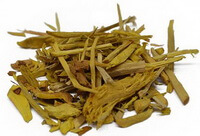
Brief Introduction:Folium et Ramulus Cotini is the dried leaf and twig of Cotinus coggygria Scop. var. cinerea Engl., used for treating jaundiced hepatitis, dysentery, and pruritic eczema. It is commonly known as Folium et Ramulus Cotini, Smoketree Twig, or Huánɡ Lú.

 ✵TCM herbalism is also known as the pharmaceutics of Traditional Chinese Medicine or Chinese pharmaceutics. It is the branch of health science dealing with the preparation, dispensing, and proper utilization of Chinese herbs. It is primarily composed of Introduction to Chinese Medicinals, Classification of Chinese Herbs, Formulas, and Patent Medicines.
 Introduction: Herbs Clearing Heat and Drying Dampness are agents or substances bitter in taste and cold in property, effective for eliminating heat and dampness. They are commonly used to treat diseases caused by damp-heat, such as acute jaundice, acute dysentery, urinary tract infections, eczema, boils, and abscesses.
 Brief Introduction: Radix Scutellariae is the dried root of Scutellaria baicalensis Georgi. It is used: (1) to clear heat and dry dampness—treating damp-warm and damp-heat syndromes; (2) to clear lung heat—relieving cough due to lung heat; (3) to purge fire and resolve toxins—treating boils, sores, and painful throat swelling; (4) to cool the blood—stanching hematemesis, epistaxis, and abnormal uterine bleeding; and (5) to stabilize the fetus—preventing miscarriage in cases of threatened abortion. The herb is commonly known as Radix Scutellariae, Baical Skullcap Root, or Huáng Qín.
 Brief Introduction: Cortex Phellodendri is the dried bark of the Chinese corktree, Phellodendron chinense Schneid., or the Amur corktree, Phellodendron amurense Rupr. It is used (1) to clear heat and dry dampness in cases of acute dysentery, jaundice, morbid leukorrhea, and heat stranguria; (2) to purge fire and counteract toxins for treating boils, sores, and ulcers; and (3) to relieve fever in cases of Yin deficiency with night sweats. The herb is commonly known as Cortex Phellodendri, Amur Cork-tree, or Huánɡ Bò.
 Brief Introduction: The herb Radix Berberidis is the dried root of Berberis soulieana Schneid., Berberis wilsonae Hemsl., Berberis poiretii Schneid., or Berberis vernae Schneid., used similarly to Coptis chinensis (Huang Lian, "Golden Thread"). It is commonly known as Barberry Root, Root of Chinese Barberry, or Sān Kē Zhēn.
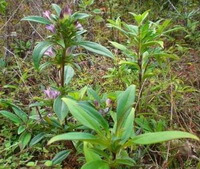 Brief Introduction: Radix Gentianae is the dried root and rhizome of Gentiana manshurica Kitag., Gentiana scabra Bunge., Gentiana triflora Pall., or Gentiana rigescens Franch. It is used to clear heat, dry dampness, and purge liver and gallbladder fire for treating: (1) damp-heat in the liver and gallbladder—manifesting as morbid leukorrhea, jaundice, or eczema; and (2) liver fire—manifesting as headache, hypochondriac pain, deafness, or convulsions. The herb is commonly known as Radix Gentianae, Chinese Gentian, or Lónɡ Dǎn.
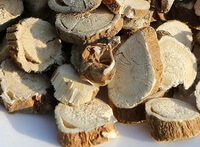 Brief Introduction: Radix Sophorae Flavescentis is the dried root of Sophora flavescens Ait., used to clear heat, dry dampness, expel parasitic worms, and promote diuresis—indicated for acute dysentery, jaundice, morbid leukorrhea, and, topically, for eczema and scabies. It is commonly known as Radix Sophorae Flavescentis, Light-Yellow Sophora Root, or Kǔ Shēn.
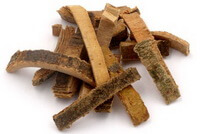 Brief Introduction: Cortex Fraxini is the dried branch bark or trunk bark of Fraxinus rhynchophylla Hance, Fraxinus chinensis Roxb., or Fraxinus stylosa Lingelsh., used to treat acute dysentery and ocular inflammation. It is commonly known as Cortex Fraxini, Ash Bark, or Qín Pí.
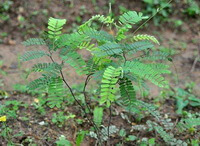 Brief Introduction: Herba Abri is the dried whole plant of Abrus cantoniensis Hance, used to clear heat, resolve dampness, soothe the liver, and alleviate pain—particularly for hepatitis and epigastric pain. It is commonly known as Canton Love-pea Vine, Jī Gǔ Cǎo, or Herba Abri.
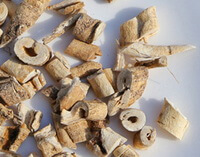 Brief Introduction: Cortex Dictamni is the dried root-bark of Dictamnus dasycarpus Turcz., used internally or externally for skin diseases characterized by excessive secretion and pruritus. It is commonly known as Cortex Dictamni, Dittany Root-bark, or Bái Xiān Pí.
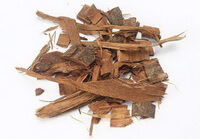 Brief Introduction: Cortex Ailanthi is the dried root bark or stem bark of Ailanthus altissima (Mill.) Swingle, used to treat diarrhea, chronic dysentery, metrorrhagia, leukorrhea, and prolapse of the uterus. It is commonly known as Cortex Ailanthi, Tree-of-heaven Bark, or Chūn Pí.
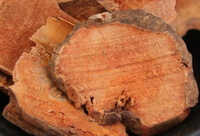 Brief Introduction: Rhizoma Smilacis Glabrae is the dried rhizome of Smilax glabra Roxb., used to counteract toxins and eliminate dampness in the treatment of syphilis, pathological leukorrhea, and heat-induced stranguria. It is commonly known as Rhizoma Smilacis Glabrae, Glabrous Greenbrier Rhizome, or Tǔ Fú Línɡ.
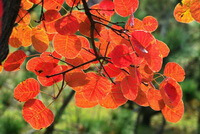 Brief Introduction: Folium et Ramulus Cotini is the dried leaf and twig of Cotinus coggygria Scop. var. cinerea Engl., used for treating jaundiced hepatitis, dysentery, and pruritic eczema. It is commonly known as Folium et Ramulus Cotini, Smoketree Twig, or Huánɡ Lú.