✵TCM herbalism is also known as the pharmaceutics of Traditional Chinese Medicine or Chinese pharmaceutics. It is the branch of health science dealing with the preparation, dispensing, and proper utilization of Chinese herbs. It is primarily composed of Introduction to Chinese Medicinals, Classification of Chinese Herbs, Formulas, and Patent Medicines.
Herbs Clearing Heat and Purging Fire
Introduction: Herbs Clearing Heat and Purging Fire are agents or substances that clear heat from the Qi system—manifesting as high fever, intense thirst, dry yellow tongue coating, and rapid surging pulse—or purge fire from internal organs, such as heart fire or liver fire.
Heat-clearing herbs are mostly cold or cool in nature; a few are neutral and cool. Most are bitter in flavor; some are sweet, pungent, or salty. Their functions include clearing heat, purging fire, cooling blood, detoxifying heat pathogens, relieving deficient heat, drying dampness, draining dampness, nourishing Yin, and resolving exterior patterns. These herbs are primarily used for various interior-heat syndromes. Heat-clearing herbs are classified into several categories: ①.heat-clearing and fire-purging herbs, ②.heat-clearing and dampness-drying herbs, ③.heat-clearing and counteracting-toxins herbs, ④.heat-clearing and blood-cooling herbs, and ⑤.asthenic heat-clearing herbs.
Heat-clearing and fire-purging herbs are mostly greatly cold, slightly cold, or cool in nature, and pungent, bitter, or sweet in flavor. They dispel excessive heat in the Qi phase; their heat-clearing effect is relatively strong. These herbs are mainly used for interior-heat excess syndromes, such as hyperpyrexia and polydipsia (high fever and excessive thirst), dryness, etc. Representative herbs include Gypsum Fibrosum (Shí Gāo), Rhizoma Anemarrhenae (Zhī Mǔ), Radix Trichosanthis (Tiān Huā Fěn), Semen Cassiae (Jué Mínɡ Zǐ), Semen Celosiae (Qīnɡ Xiānɡ Zǐ), Herba Lophatheri (Dàn Zhú Yè), Plumula Nelumbinis (Lián Zǐ Xīn), Rhizoma Phragmitis (Lú Gēn), Spica Prunellae (Xià Kū Cǎo), Flos Eriocauli (Gǔ Jīnɡ Cǎo), Flos Buddlejae (Mì Ménɡ Huā), Herba Equiseti (Mù Zéi), Folium Apocyni Veneti (Luó Bù Má Yè), Fructus Gardeniae (Zhī Zi), Herba Commelinae (Yā Zhí Cǎo), and Lotus Leaf (Hé Yè).
Among the above herbs, Radix Trichosanthis (Tiān Huā Fěn) is introduced under Expectorants herbs for resolving heat-phlegm, Herba Commelinae (Yā Zhí Cǎo) is introduced under Heat-clearing and counteracting-toxins herbs, Lotus Leaf (Hé Yè) is introduced under Popular Herbs.
✵As of January 1, 2024, this category records a total of [13] kinds of common TCM herbs, [17] related plant species, and [1] related mineral. These Herbs Clearing Heat and Purging Fire are briefly introduced separately.
Gypsum Fibrosum (Gypsum)
Brief Introduction:Gypsum Fibrosum is a soft mineral composed primarily of hydrated calcium sulfate (CaSO42H2O). It is used to clear heat and drain fire, particularly for: (1) high fever with restlessness and thirst in warm diseases; (2) lung-heat manifesting as cough and dyspnea; and (3) stomach-heat causing toothache and painful gingival swelling. Externally, it promotes wound and ulcer healing. The herb is commonly known as Gypsum Fibrosum, Gypsum, or Shí Gāo.
Rhizoma Anemarrhenae (Common Anemarrhena Rhizome)
Brief Introduction:Rhizoma Anemarrhenae is the dried rhizome of Anemarrhena asphodeloides Bunge. It is used: (1) to clear heat and drain fire—relieving high fever with intense thirst in warm diseases and cough due to lung-heat; and (2) to nourish yin and moisten the intestines—treating low-grade fever in yin deficiency, diabetes mellitus, and constipation. The herb is commonly known as Rhizoma Anemarrhenae, Common Anemarrhena Rhizome, or Zhī Mǔ.
Semen Cassiae (Cassia Seed)
Brief Introduction:Semen Cassiae is the dried, ripe seed of Cassia obtusifolia L. or Cassia tora L. It is used (1) to clear liver heat and improve vision—indicated for acute ocular inflammation; (2) to moisten the intestines and relieve constipation; and (3) currently employed for reducing hypertension and hypercholesterolemia. It is commonly known as Semen Cassiae, Cassia Seed, or Jué Míng Zǐ.
Semen Celosiae (Feather Cockscomb Seed)
Brief Introduction:Semen Celosiae is the dried, ripe seed of Celosia argentea L. It clears liver heat, improves vision, and resolves nebulae. It is indicated for acute conjunctivitis, blurred vision due to corneal opacities (nebulae), and dizziness caused by liver-yang hyperactivity. It is commonly known as Semen Celosiae, Feather Cockscomb Seed, or Qīnɡ Xiānɡ Zǐ.
Herba Lophatheri (Lophatherum Herb)
Brief Introduction:Herba Lophatheri is the dried stem and leaf of Lophatherum gracile Brongn., used to relieve restlessness and thirst in febrile diseases and to treat dysuria with painful urination. It is also commonly referred to as bamboo leaf. The herb is widely known as Common Lophatherum Herb, Common Lophatherum, or Dàn Zhú Yè.
Plumula Nelumbinis (Lotus Plumule)
Brief Introduction:Plumula Nelumbinis is the dried plumule and radicle from the ripe seeds of Nelumbo nucifera Gaertn. It is used (1) to clear heat from the Heart and calm the Shen, for treating delirium in acute febrile diseases, insomnia, and nocturnal emission; and (2) to stop seminal emission and bleeding, especially in cases of seminal emission and hematemesis due to blood-heat. The herb is commonly known as Plumula Nelumbinis, Lotus Plumule, or Lián Zǐ Xīn.
Rhizoma Phragmitis (Reed Rhizome)
Brief Introduction:Rhizoma Phragmitis is the fresh or dried rhizome of Phragmites communis (L.) Trin. It is used (1) to clear Heat and promote fluid production in cases of high fever with thirst; (2) to drain pus, especially in lung abscess; and (3) to arrest vomiting due to Stomach-Heat. The herb is commonly known as Rhizoma Phragmitis, Reed Rhizome, or Lú Gēn.
Spica Prunellae (Common Selfheal Fruit-Spike)
Brief Introduction:Spica Prunellae is the dried fruit-spike of Prunella vulgaris L. (family Lamiaceae), used (1) to clear liver fire—for the treatment of acute conjunctivitis, headache, and dizziness—and (2) to dissipate nodules—for treating acute mastitis, mumps, scrofula, and goiter. The herb is commonly known as Spica Prunellae, Common Selfheal Fruit-Spike, or Xià Kū Cǎo.
Flos Eriocauli (Pipewort Flower)
Brief Introduction:Flos Eriocauli is the dried flower head with its stalk of Eriocaulon beurgerianum Koern., used to dispel wind-heat for the treatment of acute conjunctivitis, nebula, and headache. It is commonly known as Flos Eriocauli, Pipewort Flower, or Gǔ Jīnɡ Cǎo.
Flos Buddlejae (Pale Butterfly-bush Flower)
Brief Introduction:Flos Buddlejae is the dried flower bud and inflorescence of Buddleja officinalis Maxim., used to clear liver heat and resolve nebula for treating acute conjunctivitis with lacrimation and photophobia, and blurred vision due to nebula. It is commonly known as Flos Buddlejae, Pale Butterfly-bush Flower, or Mì Ménɡ Huā.
Herba Equiseti (Common Scouring Rush Herb)
Brief Introduction:Herba Equiseti is the dried aerial part of Equisetum hiemale L., used in traditional ophthalmology for treating acute eye infections and resolving nebula (corneal opacities). It is commonly known as Herba Equiseti, Common Scouring Rush Herb, or Mù Zéi.
Folium Apocyni Veniti (Dogbane Leaf)
Brief Introduction:Folium Apocyni Veneti is the dried leaf of Apocynum venetum L. (red dogbane), used to subdue hyperactive Liver-Yang, clear heat, and promote diuresis. It is commonly known as Folium Apocyni Veneti, Dogbane Leaf, or Luó Bù Má Yè.
Fructus Gardeniae (Cape-jasmine Fruit)
Brief Introduction:Fructus Gardeniae is the dried fruit of Gardenia jasminoides Ellis. It is used (1) to purge fire and calm the mind in cases of fever with restlessness and insomnia, and (2) to clear damp-heat from the liver and gallbladder—e.g., in acute icteric hepatitis—and to cool the blood and counteract toxins in cases of bleeding, sores, and ulcers. The herb is commonly known as Fructus Gardeniae, Cape Jasmine Fruit, or Zhī Zǐ.

 ✵TCM herbalism is also known as the pharmaceutics of Traditional Chinese Medicine or Chinese pharmaceutics. It is the branch of health science dealing with the preparation, dispensing, and proper utilization of Chinese herbs. It is primarily composed of Introduction to Chinese Medicinals, Classification of Chinese Herbs, Formulas, and Patent Medicines.
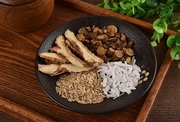 Introduction: Herbs Clearing Heat and Purging Fire are agents or substances that clear heat from the Qi system—manifesting as high fever, intense thirst, dry yellow tongue coating, and rapid surging pulse—or purge fire from internal organs, such as heart fire or liver fire.
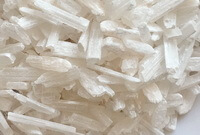 Brief Introduction: Gypsum Fibrosum is a soft mineral composed primarily of hydrated calcium sulfate (CaSO42H2O). It is used to clear heat and drain fire, particularly for: (1) high fever with restlessness and thirst in warm diseases; (2) lung-heat manifesting as cough and dyspnea; and (3) stomach-heat causing toothache and painful gingival swelling. Externally, it promotes wound and ulcer healing. The herb is commonly known as Gypsum Fibrosum, Gypsum, or Shí Gāo.
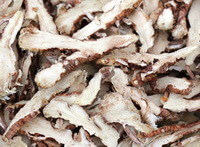 Brief Introduction: Rhizoma Anemarrhenae is the dried rhizome of Anemarrhena asphodeloides Bunge. It is used: (1) to clear heat and drain fire—relieving high fever with intense thirst in warm diseases and cough due to lung-heat; and (2) to nourish yin and moisten the intestines—treating low-grade fever in yin deficiency, diabetes mellitus, and constipation. The herb is commonly known as Rhizoma Anemarrhenae, Common Anemarrhena Rhizome, or Zhī Mǔ.
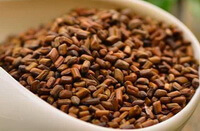 Brief Introduction: Semen Cassiae is the dried, ripe seed of Cassia obtusifolia L. or Cassia tora L. It is used (1) to clear liver heat and improve vision—indicated for acute ocular inflammation; (2) to moisten the intestines and relieve constipation; and (3) currently employed for reducing hypertension and hypercholesterolemia. It is commonly known as Semen Cassiae, Cassia Seed, or Jué Míng Zǐ.
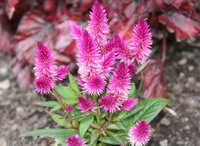 Brief Introduction: Semen Celosiae is the dried, ripe seed of Celosia argentea L. It clears liver heat, improves vision, and resolves nebulae. It is indicated for acute conjunctivitis, blurred vision due to corneal opacities (nebulae), and dizziness caused by liver-yang hyperactivity. It is commonly known as Semen Celosiae, Feather Cockscomb Seed, or Qīnɡ Xiānɡ Zǐ.
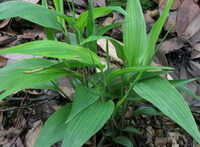 Brief Introduction: Herba Lophatheri is the dried stem and leaf of Lophatherum gracile Brongn., used to relieve restlessness and thirst in febrile diseases and to treat dysuria with painful urination. It is also commonly referred to as bamboo leaf. The herb is widely known as Common Lophatherum Herb, Common Lophatherum, or Dàn Zhú Yè.
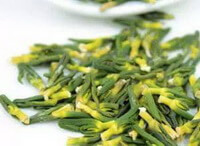 Brief Introduction: Plumula Nelumbinis is the dried plumule and radicle from the ripe seeds of Nelumbo nucifera Gaertn. It is used (1) to clear heat from the Heart and calm the Shen, for treating delirium in acute febrile diseases, insomnia, and nocturnal emission; and (2) to stop seminal emission and bleeding, especially in cases of seminal emission and hematemesis due to blood-heat. The herb is commonly known as Plumula Nelumbinis, Lotus Plumule, or Lián Zǐ Xīn.
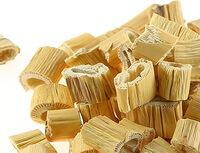 Brief Introduction: Rhizoma Phragmitis is the fresh or dried rhizome of Phragmites communis (L.) Trin. It is used (1) to clear Heat and promote fluid production in cases of high fever with thirst; (2) to drain pus, especially in lung abscess; and (3) to arrest vomiting due to Stomach-Heat. The herb is commonly known as Rhizoma Phragmitis, Reed Rhizome, or Lú Gēn.
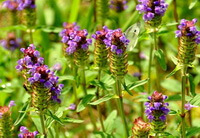 Brief Introduction: Spica Prunellae is the dried fruit-spike of Prunella vulgaris L. (family Lamiaceae), used (1) to clear liver fire—for the treatment of acute conjunctivitis, headache, and dizziness—and (2) to dissipate nodules—for treating acute mastitis, mumps, scrofula, and goiter. The herb is commonly known as Spica Prunellae, Common Selfheal Fruit-Spike, or Xià Kū Cǎo.
 Brief Introduction: Flos Eriocauli is the dried flower head with its stalk of Eriocaulon beurgerianum Koern., used to dispel wind-heat for the treatment of acute conjunctivitis, nebula, and headache. It is commonly known as Flos Eriocauli, Pipewort Flower, or Gǔ Jīnɡ Cǎo.
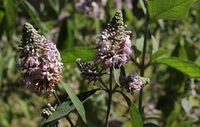 Brief Introduction: Flos Buddlejae is the dried flower bud and inflorescence of Buddleja officinalis Maxim., used to clear liver heat and resolve nebula for treating acute conjunctivitis with lacrimation and photophobia, and blurred vision due to nebula. It is commonly known as Flos Buddlejae, Pale Butterfly-bush Flower, or Mì Ménɡ Huā.
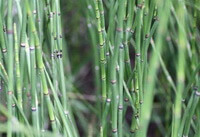 Brief Introduction: Herba Equiseti is the dried aerial part of Equisetum hiemale L., used in traditional ophthalmology for treating acute eye infections and resolving nebula (corneal opacities). It is commonly known as Herba Equiseti, Common Scouring Rush Herb, or Mù Zéi.
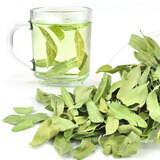 Brief Introduction: Folium Apocyni Veneti is the dried leaf of Apocynum venetum L. (red dogbane), used to subdue hyperactive Liver-Yang, clear heat, and promote diuresis. It is commonly known as Folium Apocyni Veneti, Dogbane Leaf, or Luó Bù Má Yè.
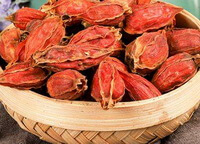 Brief Introduction: Fructus Gardeniae is the dried fruit of Gardenia jasminoides Ellis. It is used (1) to purge fire and calm the mind in cases of fever with restlessness and insomnia, and (2) to clear damp-heat from the liver and gallbladder—e.g., in acute icteric hepatitis—and to cool the blood and counteract toxins in cases of bleeding, sores, and ulcers. The herb is commonly known as Fructus Gardeniae, Cape Jasmine Fruit, or Zhī Zǐ.