✵Well-known ancient works of TCM include Huangdi Neijing (The Yellow Emperor’s Internal Canon), Nan Jing (The Difficult Classic), Shanghan Zabing Lun (The Treatise on Cold Pathogenic and Miscellaneous Diseases), Shen Nong Ben Cao Jing (Shen Nong’s Materia Medica), and other seminal texts—such as Zhong Zang Jing (The Central Treasury Canon), Bei Ji Qian Jin Yao Fang (The Invaluable Prescriptions for Emergencies), and Qian Jin Yi Fang (The Supplement to the Invaluable Prescriptions).
Huangdi Neijing (The Yellow Emperor’s Internal Canon) is the cornerstone of traditional Chinese medicine (TCM) theory, covering fundamental theories and treatment principles. Nan Jing (The Difficult Classic) provides an in-depth exploration of pulse diagnosis and acupuncture in TCM. Shanghan Zabing Lun (The Treatise on Cold Pathogenic and Miscellaneous Diseases) is a foundational clinical guide in Chinese medicine, introducing pivotal theories on diagnosis and prescription formulation. Shen Nong Ben Cao Jing (Shen Nong’s Materia Medica) is a classical pharmacopoeia that establishes the theoretical foundation for the application of herbal medicine in TCM. Collectively, these texts constitute the core of the TCM theoretical system and remain indispensable to its study and practice.
Huangdi Neijing, or Huangdi’s Internal Classic—also known as the Huangdi Neijing, Huangdi’s Internal Canon, the Yellow Emperor’s Internal Canon, or the Yellow Emperor’s Internal Classic—is the oldest and most influential extant medical classic in China. Its authorship is traditionally ascribed to the legendary Yellow Emperor (Huangdi, r. 2698–2589 BCE). The text comprises two parts:Su Wen (The Plain Questions) and Ling Shu (The Spiritual Pivot or Divine Axis), the latter of which is also known as the Canon of Acupuncture.
Zhong Zang Jing
Zhong Zang Jing, also known as Hua Shi Zhong Zang Jing or the Treasured Classic, is a comprehensive ancient text on herbal medicine and clinical treatment. Although its authorship has traditionally been ascribed to the prominent Eastern Han physician Hua Tuo, modern scholarship holds that it was likely compiled by unknown authors during the Six Dynasties period (386–589 CE). The book comprises 49 chapters covering diagnosis and treatment, pulse diagnosis, Zang-Fu viscera theory, deficiency-excess syndromes, and cold and heat syndromes, as well as a list of remedies.
Bei Ji Qian Jin Yao Fang
Bei Ji Qian Jin Yao Fang (The Invaluable Prescriptions for Emergencies), or Qian Jin Yao Fang (The Invaluable Prescriptions) was compiled by the physician Sun Simiao at the end of the 7th century. It is a 30-volume work containing a general introduction and prescriptions from various branches of medicine, dietetics, pulse diagnosis, and acupuncture. It is known as the first renowned medical encyclopedia in China.
Qian Jin Yi Fang
Qian Jin Yi Fang (The Supplement to the Invaluable Prescriptions) was compiled by the physician Sun Simiao in the late 7th century. It is a 30-volume work covering various subjects, including materia medica, febrile diseases, obstetrics and gynecology, pediatrics, internal medicine, pulse diagnosis, acupuncture, and dietetics. Together with Qian Jin Yao Fang (The Invaluable Prescriptions for Emergencies), it constitutes a comprehensive compendium of medical knowledge accumulated prior to the Tang Dynasty.
Nan Jing
Nan Jing—also known as the Difficult Classic, the Classic of Questioning, or the Classic of Difficult Issues—is a foundational medical text that likely originated during the late Warring States period or early Han dynasty (circa 3rd–2nd century BCE). Its authorship remains uncertain, though it has traditionally been attributed to Qin Yueren (Bian Que). It is one of the most revered ancient Chinese medical classics, and its origins are surrounded by multiple legendary accounts. The text systematically addresses fundamental theoretical concepts and elaborates key doctrines of the Huangdi Neijing (The Yellow Emperor’s Internal Classic) through a question-and-answer format.
Shanghan Zabing Lun
Shanghan Zabing Lun—the Treatise on Cold Pathogenic and Miscellaneous Diseases, also known as the Treatise on Cold-induced and Miscellaneous Diseases—was compiled by the physician Zhang Zhongjing near the end of the Eastern Han dynasty (c. 200–210 CE). Though traditionally attributed to Zhang Zhongjing, the original text was lost and later reconstructed and edited by the Jin-dynasty physician Wang Shuhe. It systematically addresses the diagnosis and treatment of cold-induced diseases and a wide range of miscellaneous internal diseases.
Ben Jing
Ben Jing, also known as Shen Nong Ben Cao Jing, or Shen Nong’s Herbal, is one of China’s earliest materia medica. It dates to the 1st century BCE, and its authorship is traditionally attributed to the legendary emperor Shen Nong (the Divine Farmer). It is the earliest surviving pharmacological monograph and the first systematic summary of China’s early clinical experience in herbal medicine. It is regarded as a classic work of traditional Chinese medicine.

 ✵Well-known ancient works of TCM include Huangdi Neijing (The Yellow Emperor’s Internal Canon), Nan Jing (The Difficult Classic), Shanghan Zabing Lun (The Treatise on Cold Pathogenic and Miscellaneous Diseases), Shen Nong Ben Cao Jing (Shen Nong’s Materia Medica), and other seminal texts—such as Zhong Zang Jing (The Central Treasury Canon), Bei Ji Qian Jin Yao Fang (The Invaluable Prescriptions for Emergencies), and Qian Jin Yi Fang (The Supplement to the Invaluable Prescriptions).
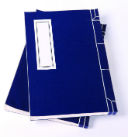 Huangdi Neijing, or Huangdi’s Internal Classic—also known as the Huangdi Neijing, Huangdi’s Internal Canon, the Yellow Emperor’s Internal Canon, or the Yellow Emperor’s Internal Classic—is the oldest and most influential extant medical classic in China. Its authorship is traditionally ascribed to the legendary Yellow Emperor (Huangdi, r. 2698–2589 BCE). The text comprises two parts:Su Wen (The Plain Questions) and Ling Shu (The Spiritual Pivot or Divine Axis), the latter of which is also known as the Canon of Acupuncture.
