✵Yin syndromes is a collective term for interior, cold and deficiency syndromes with inhibitory, hypofunctional, quiescent, or dimmed manifestations, or inward and downward symptoms, as well as diseases caused by pathogenic factors of Yin nature. Conversely, the Yang syndromes is a collective term for the exterior, heat and excess syndromes with excitatory, hyperfunctional, restless, or bright manifestations, or outward and upward symptoms, as well as diseases caused by pathogenic factors of Yang nature. The earliest records and discussions of Yang syndrome and Yin syndrome can be traced back to the ancient book the Nei Jing (the Huangdi's Internal Canon).
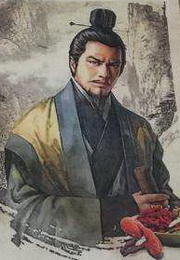
In the classification of the syndromes sequence by herbalist Zhāng Zhòngjǐng, cold-induced diseases are serious diseases with very urgent symptoms; the Yin syndromes among them are especially severe and unfavorable-priced, especially difficult to differentiate and treat. As an independent doctrine, the Yin syndrome theory was established by ancient herbalist Wáng Hǎogǔ, who lived from the beginning year of the 13th century to the early 14th century. As the founder of the Yin syndrome doctrine, he inherited the discussions and explorations about Yin syndromes from previous herbalists, and established it as an independent doctrine, opened the wisdom for later generations of herbalists.
Yin Pulse of Qi Bo and Endogenous Three Yin Syndromes of Jie Gu.
An introduction to Yin Pulse of Qi Bo. Qí Bó is a famous physician during the reign of Huangdi (the Yellow Emperor), and Endogenous Three Yin Syndromes by Jie Gu, Zhāng Yuánsù, a famous herbalist physician of the 12th century, and the founder of the Yi Shui School of TCM.
Endogenous Three Yin Syndromes of Wang Haogu.
The endogenous three Yin syndromes of Wang Haogu were established by the herbalist Wang Haogu, primarily for the complexion-pulse differentiation of the three meridians, for which the warm method should be used.
Yin Syndromes of Bian Que and Yin Syndromes of Zhong Jing.
An introduction about Yin syndromes of Bian Que and Yin syndromes of Zhong Jing. Biǎn Què is a famous ancient herbalist physician; the famous ancient works Nan Jing (the Difficult Classic) were ascribed to him.
Yin Syndromes of Zhu Gong.
Introduction to the Three Yin Syndromes, the theory of Yin toxin and three Yin, Yin syndrome similar to Yang, Exessive Yin refusing Yang, Yin Yang Exchange, Untreatable for Yin Toxin three syndromes till seven days. Zhū Gōng, a herbalist physician who lived at the end years of the North Song Dynasty, conducted an in-depth study of the ancient works Shang Han Lun (the Treatise on Cold-induced Diseases).
Yin Syndromes of Xu Shuwei.
Three syndromes of Yin toxin. Xǔ Shūwēi, a leading herbalist physician of the Song dynasty, was the Meng He School's representative herbalist during the Song dynasty.
Yin Syndromes of Han Zhihe.
A general discussion of the three Yin, Harmonization depends on time or seasons. Hán Zhīhé was a herbalist physician of the northern Song dynasty. He studied the theory of exogenous febrile diseases (cold-induced diseases) intensively.
Yin Syndromes of Wang Haogu.
The Yin Syndromes theory of herbalist Wang Haogu, are mainly: (1). Yin syndrome classifications; (2). Fog and dew, cold drinks are both turbid pathogens; (3). Restlessness and non-restlessness, life pulse and death pulse of Yin syndromes.
Fog and Dew,Cold Drinks are both Turbid Pathogens.
Natural factors such as fog, dew, and cold drinks are both turbid pathogens; they can affect a person and lead to illness.
Restlessness and Non-restlessness,Life pulse and death pulse of Yin syndromes.
An introduction to the restlessness and non-restlessness of Yin syndromes differentiation, as well as the life pulse and death pulse of Yin syndromes, with related cases.
Endogenous and Exogenous types of Yang Collapse.
An introduction to the endogenous types of Yang collapse and exogenous types of Yang collapse and their related pulse manifestations.
Yin and Yang Differentiation of Wild talk,Spontaneous perspiration,Shaking of body,Syncope.
An introduction to the Yin and Yang differentiation of wild talk, the Yin and Yang differentiation of spontaneous perspiration, shaking of body, and the Yin and Yang of syncope.
Thirst,Cough,Fever,Constipation,Urinary stoppage and red urine of Yin syndrome.
An introduction to other symptoms of Yin syndromes, including thirst of Yin syndromes, cough of Yin syndromes, fever of Yin syndromes, constipation of Yin syndromes, urinary stoppage of Yin syndromes, and red urine of Yin syndromes.
Yin Yang Exchange.
The Yin syndrome and Yang syndrome exchanged, until herbalist Zhu Feng classified Yin Yang Exchange as two entries discussion, later herbalist started to know there is a difference between cold and heat.

 ✵Yin syndromes is a collective term for interior, cold and deficiency syndromes with inhibitory, hypofunctional, quiescent, or dimmed manifestations, or inward and downward symptoms, as well as diseases caused by pathogenic factors of Yin nature. Conversely, the Yang syndromes is a collective term for the exterior, heat and excess syndromes with excitatory, hyperfunctional, restless, or bright manifestations, or outward and upward symptoms, as well as diseases caused by pathogenic factors of Yang nature. The earliest records and discussions of Yang syndrome and Yin syndrome can be traced back to the ancient book the Nei Jing (the Huangdi's Internal Canon).
 An introduction to Yin Pulse of Qi Bo. Qí Bó is a famous physician during the reign of Huangdi (the Yellow Emperor), and Endogenous Three Yin Syndromes by Jie Gu, Zhāng Yuánsù, a famous herbalist physician of the 12th century, and the founder of the Yi Shui School of TCM.
 An introduction to the Yin and Yang differentiation of wild talk, the Yin and Yang differentiation of spontaneous perspiration, shaking of body, and the Yin and Yang of syncope.