Miscellaneous Internal Disease according to Jin Kui Yao Lüe
✵Miscellaneous Internal Disease, with entries from the book Jin Kui Yao Lüe Fang Lun (the Synopsis of Prescriptions of the Golden Chamber) are introduced with its outlines and explanations.
The main content is as follows: Huo Luan and dysentery syndrome, convulsive disease, coital transmission of febrile disease, taxation relapse disease, lily disease, fox bewitching syndrome, Yin and Yang toxin syndrome, malaria syndrome, blood-arthralgia, consumptive disease, cough, retained fluid, yellowish sweating, Li-jie disease, blood stasis, haematemesis, descent of blood, sore carbuncle, chest impediment, women's diseases, etc.
Huo Luan and Dysentery Syndrome:The Huo Luan disease, as described by the herbalist Zhang Zhongjing, according to its symptoms and descriptions, could be understood as being the same as gastroenteritis with its symptoms diarrhea and vomiting, etc. Dysentery is an infectious disease of the intestines, marked by abdominal pain, frequent stools containing blood and mucus, and tenesmus.
Convulsive Disease,Coital transmission of febrile disease,Taxation relapse disease
Convulsive Disease,Coital transmission of febrile disease,Taxation relapse disease: the convulsive disease is a diseased state characterised by rigidity of the nape (stiffness of the neck), convulsions of the limbs and opisthotonos. The Taxation relapse disease is a relapse of disease due to over-fatigue.
Lily disease, Fox bewitching syndrome, Yin and Yang toxin syndrome
Lily disease, Fox bewitching syndrome, Yin and Yang toxin syndrome: the Lily disease is an ancient term with mental strain, listlessness, sleeplessness, anorexia, sham heat and sham cold, bitterness in the mouth, yellow urine and a rapid pulse, etc. It is so called "Lily disease" because it can be effectively treated by administering Bulbus Lilii. Fox bewitching or throat-anus-genital syndrome is an ancient term for a disease resembling Behcet's syndrome. Yin and Yang toxin syndrome refers to two diseases, Yin toxin syndrome and Yang toxin syndrome.
Malaria syndrome
Malaria syndrome: the Malaria is an externally contracted disease caused by malarial parasites. It is characterised by paroxysms of shivering chills, high fever, and sweating, and is also known as "nue bing".
Blood-arthralgia, Consumptive Disease
Blood-arthralgia, Consumptive Disease: blood-arthralgia is a disease caused by deficiency of blood and Qi, or sleep in wind, or wind caused in sweating due to taxation and result in obstacle of Qi and blood. Consumtive disease is a disease characterised by consumption, either infectious or non-infectious; the former is also known as phthisis, and the latter is known as consumption.
Cough, Retained fluid,Yellowish sweating,Li-jie disease:Cough:strictly speaking, Ke means the expelling of air from the lungs suddenly with an explosive noise but without expectoration, while Sou refers to the expectoration of sputum without an explosive noise. Yellow sweating, or yellow-colored sweat associated with bitterness and stickiness in the mouth, thirst but no desire to drink, yellow and greasy tongue coating, is ascribed to the interior accumulation of damp-heat. Li-jie or arthritis is a swollen painful joints with limitation in motion, including acute rheumatic arthritis, rheumatoid arthritis and gout.
Blood Stasis, Haematemesis, Descent of blood, Sore carbuncle
Blood stasis, haematemesis, descent of blood, sore carbuncle: blood stasis, or stagnant blood, is a pathological condition resulting from blood stagnation; this includes extravasated blood and blood moving sluggishly in circulation or congested in a viscus, all of which may turn into pathogenic factors. Haematemesis is the vomiting of blood. A sore or carbuncle is any pyogenic infection on the body surface. Herbalist Zhang Zhongjing defined the blood stasis in about two syndromes, defined the haematemesis in about two syndromes, defined the descent of blood in about two syndromes, defined the sore carbuncle in about six syndromes.
Chest impediment
Chest impediment: it is also known as chest Qi-blockage, a pectoral pain; sometimes it is accompanied by a feeling of suffocation. The herbalist Zhang Zhongjing defined chest impediment as about 11 syndromes.
Women's disease
Women's disease: women's diseases are also known as gynecological syndromes (gynaecological syndromes), or women's syndromes. The herbalist Zhang Zhongjing defined the women's diseases as around 40 syndromes.

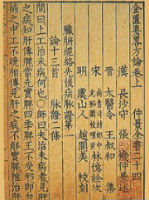 ✵Miscellaneous Internal Disease, with entries from the book Jin Kui Yao Lüe Fang Lun (the Synopsis of Prescriptions of the Golden Chamber) are introduced with its outlines and explanations.
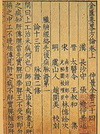 Huo Luan and Dysentery Syndrome:The Huo Luan disease, as described by the herbalist Zhang Zhongjing, according to its symptoms and descriptions, could be understood as being the same as gastroenteritis with its symptoms diarrhea and vomiting, etc. Dysentery is an infectious disease of the intestines, marked by abdominal pain, frequent stools containing blood and mucus, and tenesmus.
