✵TCM herbalism is also known as the pharmaceutics of Traditional Chinese Medicine or Chinese pharmaceutics. It is the branch of health science dealing with the preparation, dispensing, and proper utilization of Chinese herbs. It is primarily composed of Introduction to Chinese Medicinals, Classification of Chinese Herbs, Formulas, and Patent Medicines.
Pungent-cool Exterior-releasing Herbs
Introduction: Pungent-cool exterior-releasing herbs are agents that are pungent in flavor and cool in nature, commonly used to treat wind-heat exterior syndrome. Exterior-releasing herbs are typically pungent and possess dispersing properties; they expel exogenous pathogens via diaphoresis, thereby alleviating exterior syndromes. Based on differences in flavor, nature, and functional emphasis, exterior-releasing herbs are primarily classified into two categories: pungent-warm exterior-releasing herbs and pungent-cool exterior-releasing herbs.
Pungent-cool exterior-releasing herbs are predominantly cool in nature and pungent in flavor. Their diaphoretic and exterior-releasing effects are milder than those of pungent-warm exterior-releasing herbs. Their principal action is to dispel wind-heat pathogens. They are mainly indicated for syndromes caused by exogenous wind-heat invasion—such as fever, mild aversion to wind (rather than cold), dry throat and mouth, headache, conjunctival injection (red eyes), thin yellow tongue coating—and some may also be used for other wind-heat–related conditions, including epiphora (excessive tearing), pharyngeal abscess, and wind-heat cough. Representative herbs in this category include Radix Bupleuri (Chai Hu), Herba Menthae (Bo He), Fructus Arctii (Niu Bang Zi), Flos Chrysanthemi (Ju Hua), Periostracum Cicadae (Chan Tui), Semen Sojae Preparatum (Dan Dou Chi), Folium Mori (Sang Ye), Fructus Viticis (Man Jing Zi), Radix Puerariae (Ge Gen), Rhizoma Cimicifuga (Sheng Ma), Cacumen Tamaricis (Xi He Liu), and Herba Spirodelae (Fu Ping).
✵As of January 1, 2024, this category comprises a total of [12] commonly used TCM herbs derived from [20] plant species and [1] insect species. These pungent-cool exterior-releasing herbs are briefly introduced individually below.
Radix Bupleuri (Chinese Thorowax Root)
Brief Introduction:Radix Bupleuri is the dried root of Bupleurum chinense DC. or Bupleurum scorzonerifolium Willd., used (1) to reduce fever and relieve alternating chills and fever, (2) to soothe liver Qi stagnation and alleviate hypochondriac and thoracic pain, and (3) to lift spleen Qi and correct visceral prolapse.
Herba Menthae (Peppermint)
Brief Introduction:Herba Menthae is the dried aerial part of Mentha haplocalyx Briq. It is used (1) to disperse wind-heat in the treatment of wind-heat syndromes, (2) to clear the head and eyes for relieving headache and conjunctivitis, (3) to promote eruption in measles, and (4) to soothe the liver and alleviate hypochondriac and thoracic pain. The herb is commonly known as Herba Menthae, Peppermint, or Bò Hé.
Folium Mori (Mulberry Leaf)
Brief Introduction:Folium Mori is the dried leaf of the white mulberry, Morus alba L. It is used (1) to disperse wind-heat in the treatment of wind-heat invasion; (2) to pacify the liver and brighten the eyes, for conditions such as hyperactivity of liver-yang with headache and acute conjunctivitis; and (3) to clear and moisten the lung, for dry cough due to lung dryness. The herb is commonly known as Folium Mori, Mulberry Leaf, or Sānɡ Yè.
Flos Chrysanthemi (Chrysanthemum Flower)
Brief Introduction:Flos Chrysanthemi is the dried capitulum (flower-head) of Chrysanthemum morifolium Ramat. It is used (1) to disperse wind-heat in the treatment of wind-heat invasion accompanied by fever and headache; (2) to pacify the liver and brighten the eyes, for conditions such as acute conjunctivitis and dizziness due to hyperactivity of liver-yang; and (3) to clear heat and resolve toxins, for boils and sores. The herb is commonly known as Flos Chrysanthemi, Chrysanthemum Flower, or Jú Huā.
Radix Puerariae (Kudzuvine Root)
Brief Introduction:Radix Puerariae is the dried root of Pueraria lobata (Willd.) Ohwi or Pueraria thomsonii Benth., used (1) to reduce heat in exterior syndromes accompanied by fever and painful stiffness of the nape and back; (2) to relieve thirst in febrile diseases and diabetes mellitus; (3) to alleviate diarrhea due to spleen deficiency; and (4) to promote the eruption of measles. The herb is commonly known as Radix Puerariae, Kudzuvine Root, or Gě Gēn.
Fructus Arctii (Burdock Fruit)
Brief Introduction:Fructus Arctii is the dried, ripe fruit of Arctium lappa L. (great burdock). It is used (1) to disperse wind-heat in the treatment of wind-heat syndromes; (2) to promote eruption in measles; and (3) to clear toxins and reduce swelling in boils, sores, mumps, and erysipelas. The herb is commonly known as Fructus Arctii, Burdock Fruit, or Niú Bàng Zǐ.
Fructus Viticis (Shrub Chaste-tree Fruit)
Brief Introduction:Fructus Viticis is the dried, ripe fruit of Vitex trifolia L. var. simplicifolia Cham. (commonly known as simple-leaved chaste tree) or Vitex trifolia L. (three-leaved chaste tree). It is used to treat wind-heat syndromes with fever and headache, acute conjunctivitis, blurred vision, and dizziness. The herb is commonly known as Fructus Viticis, Shrub Chaste-tree Fruit, or Màn Jīnɡ Zǐ.
Periostracum Cicadae (Cicada Slough)
Brief Introduction:Periostracum Cicadae is the exuviae (slough) shed by the nymph of Cryptotympana pustulata Fabr. It is used: (1) to disperse wind-heat in the treatment of wind-heat disorders; (2) to promote eruption in measles and relieve itching in urticaria; (3) to remove corneal opacities and improve vision; and (4) to relieve spasms in infantile convulsions and tetanus.
Brief Introduction:Rhizoma Cimicifugae is the dried rhizome of Cimicifuga heracleifolia Kom., Cimicifuga dahurica (Turcz.) Maxim., or Cimicifuga foetida L. It is used: (1) to promote eruption in measles; (2) to clear heat and counteract toxins in sore throat and stomatitis; and (3) to lift sunken viscera (restore the normal position) in cases of splanchnoptosis. It is commonly known as Rhizoma Cimicifugae, Largetrifoliolious Bugbane Rhizome, or Shēng Má.
Semen Sojae Preparatum (Fermented Soybean)
Brief Introduction:Semen Sojae Preparatum is the fermented preparation of the ripe seed of Glycine max (L.) Merr. It is used in the early stage of febrile diseases to release the exterior and in the late stage to alleviate restlessness and insomnia. Commonly known as Semen Sojae Preparatum, Fermented Soybean, or Dàn Dòu Chǐ.
Cacumen Tamaricis (Chinese Tamarisk Twig)
Brief Introduction:Cacumen Tamaricis is the dried young green twigs and leaves of Tamarix chinensis Lour., used to promote eruption in measles and to alleviate arthralgia in rheumatism. Commonly known as Cacumen Tamaricis, Chinese Tamarisk Twig, or Xī Hé Liǔ.
Herba Spirodelae (Common ducksmeat Herb)
Brief Introduction:Herba Spirodelae is the dried whole plant of Spirodela polyrrhiza (L.) Schleiden. It is used to promote measles eruption, relieve itching in urticaria, and induce diuresis in edema.

 ✵TCM herbalism is also known as the pharmaceutics of Traditional Chinese Medicine or Chinese pharmaceutics. It is the branch of health science dealing with the preparation, dispensing, and proper utilization of Chinese herbs. It is primarily composed of Introduction to Chinese Medicinals, Classification of Chinese Herbs, Formulas, and Patent Medicines.
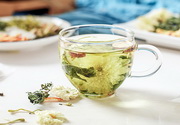 Introduction: Pungent-cool exterior-releasing herbs are agents that are pungent in flavor and cool in nature, commonly used to treat wind-heat exterior syndrome. Exterior-releasing herbs are typically pungent and possess dispersing properties; they expel exogenous pathogens via diaphoresis, thereby alleviating exterior syndromes. Based on differences in flavor, nature, and functional emphasis, exterior-releasing herbs are primarily classified into two categories: pungent-warm exterior-releasing herbs and pungent-cool exterior-releasing herbs.
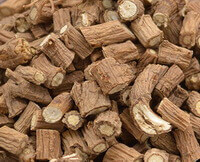 Brief Introduction: Radix Bupleuri is the dried root of Bupleurum chinense DC. or Bupleurum scorzonerifolium Willd., used (1) to reduce fever and relieve alternating chills and fever, (2) to soothe liver Qi stagnation and alleviate hypochondriac and thoracic pain, and (3) to lift spleen Qi and correct visceral prolapse.
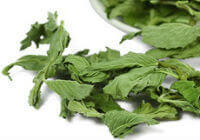 Brief Introduction: Herba Menthae is the dried aerial part of Mentha haplocalyx Briq. It is used (1) to disperse wind-heat in the treatment of wind-heat syndromes, (2) to clear the head and eyes for relieving headache and conjunctivitis, (3) to promote eruption in measles, and (4) to soothe the liver and alleviate hypochondriac and thoracic pain. The herb is commonly known as Herba Menthae, Peppermint, or Bò Hé.
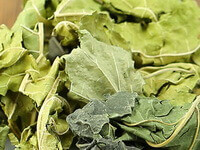 Brief Introduction: Folium Mori is the dried leaf of the white mulberry, Morus alba L. It is used (1) to disperse wind-heat in the treatment of wind-heat invasion; (2) to pacify the liver and brighten the eyes, for conditions such as hyperactivity of liver-yang with headache and acute conjunctivitis; and (3) to clear and moisten the lung, for dry cough due to lung dryness. The herb is commonly known as Folium Mori, Mulberry Leaf, or Sānɡ Yè.
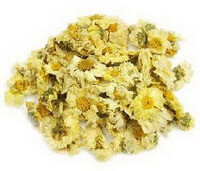 Brief Introduction: Flos Chrysanthemi is the dried capitulum (flower-head) of Chrysanthemum morifolium Ramat. It is used (1) to disperse wind-heat in the treatment of wind-heat invasion accompanied by fever and headache; (2) to pacify the liver and brighten the eyes, for conditions such as acute conjunctivitis and dizziness due to hyperactivity of liver-yang; and (3) to clear heat and resolve toxins, for boils and sores. The herb is commonly known as Flos Chrysanthemi, Chrysanthemum Flower, or Jú Huā.
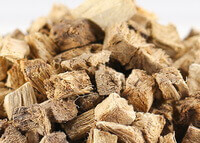 Brief Introduction: Radix Puerariae is the dried root of Pueraria lobata (Willd.) Ohwi or Pueraria thomsonii Benth., used (1) to reduce heat in exterior syndromes accompanied by fever and painful stiffness of the nape and back; (2) to relieve thirst in febrile diseases and diabetes mellitus; (3) to alleviate diarrhea due to spleen deficiency; and (4) to promote the eruption of measles. The herb is commonly known as Radix Puerariae, Kudzuvine Root, or Gě Gēn.
 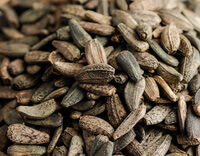 Brief Introduction: Fructus Arctii is the dried, ripe fruit of Arctium lappa L. (great burdock). It is used (1) to disperse wind-heat in the treatment of wind-heat syndromes; (2) to promote eruption in measles; and (3) to clear toxins and reduce swelling in boils, sores, mumps, and erysipelas. The herb is commonly known as Fructus Arctii, Burdock Fruit, or Niú Bàng Zǐ.
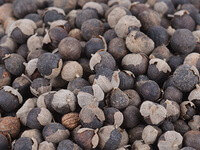 Brief Introduction: Fructus Viticis is the dried, ripe fruit of Vitex trifolia L. var. simplicifolia Cham. (commonly known as simple-leaved chaste tree) or Vitex trifolia L. (three-leaved chaste tree). It is used to treat wind-heat syndromes with fever and headache, acute conjunctivitis, blurred vision, and dizziness. The herb is commonly known as Fructus Viticis, Shrub Chaste-tree Fruit, or Màn Jīnɡ Zǐ.
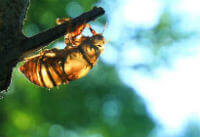 Brief Introduction: Periostracum Cicadae is the exuviae (slough) shed by the nymph of Cryptotympana pustulata Fabr. It is used: (1) to disperse wind-heat in the treatment of wind-heat disorders; (2) to promote eruption in measles and relieve itching in urticaria; (3) to remove corneal opacities and improve vision; and (4) to relieve spasms in infantile convulsions and tetanus.
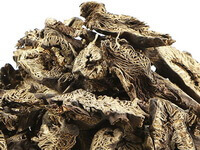 Brief Introduction: Rhizoma Cimicifugae is the dried rhizome of Cimicifuga heracleifolia Kom., Cimicifuga dahurica (Turcz.) Maxim., or Cimicifuga foetida L. It is used: (1) to promote eruption in measles; (2) to clear heat and counteract toxins in sore throat and stomatitis; and (3) to lift sunken viscera (restore the normal position) in cases of splanchnoptosis. It is commonly known as Rhizoma Cimicifugae, Largetrifoliolious Bugbane Rhizome, or Shēng Má.
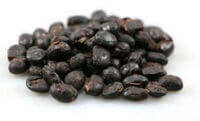 Brief Introduction: Semen Sojae Preparatum is the fermented preparation of the ripe seed of Glycine max (L.) Merr. It is used in the early stage of febrile diseases to release the exterior and in the late stage to alleviate restlessness and insomnia. Commonly known as Semen Sojae Preparatum, Fermented Soybean, or Dàn Dòu Chǐ.
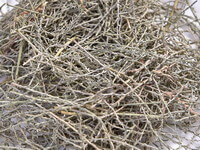 Brief Introduction: Cacumen Tamaricis is the dried young green twigs and leaves of Tamarix chinensis Lour., used to promote eruption in measles and to alleviate arthralgia in rheumatism. Commonly known as Cacumen Tamaricis, Chinese Tamarisk Twig, or Xī Hé Liǔ.
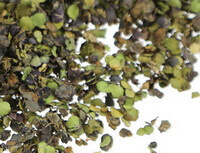 Brief Introduction: Herba Spirodelae is the dried whole plant of Spirodela polyrrhiza (L.) Schleiden. It is used to promote measles eruption, relieve itching in urticaria, and induce diuresis in edema.